




How to Choose an Air Track: A Guide for Home and Club Training


Air tracks have become a popular training option for gymnasts, cheerleaders, dancers and acrobats. Their inflatable construction creates a responsive surface for practicing skills and drills, while their ability to deflate makes them convenient to transport and store.
However, air tracks vary considerably in length, width, thickness and construction. The right option will depend on the athlete, the activities it will be used for and, importantly, the space available around it.
Whether you are choosing an air track for home practice, a gymnastics club, a school or a studio, this guide explains the main factors to consider before purchasing.
What Is an Air Track?
An air track is an inflatable training mat constructed using drop-stitch material. Thousands of internal threads connect the top and bottom surfaces, allowing the mat to maintain a flat, stable shape when inflated.
Unlike a traditional foam mat, the firmness of an air track can be adjusted by changing its air pressure. This creates a responsive surface that can help reduce the impact associated with repetitive training while providing rebound for gymnastics and tumbling activities.
Air tracks can be used for a range of activities, including:
- Gymnastics and tumbling
- Cheerleading
- Dance and acrobatics
- Tricking and martial arts
- Jumps, leaps and conditioning exercises
- Handstands, cartwheels, walkovers and round-offs
- Connected skills and tumbling progressions, where sufficient length is available
An air track does not replace every type of gymnastics mat. Landing mats, folding mats and crash mats perform different roles and may still be required as part of an appropriate training setup.
What Are the Benefits of an Air Track?
A responsive training surface
An air track provides more rebound than a standard foam mat. This can make it useful for tumbling drills, repetitive training and developing the power and coordination required for connected movements.
Adjustable firmness
Air pressure can be adjusted to change the feel of the surface. A firmer air track generally feels more stable and provides a faster response, while a lower pressure creates a softer surface with different rebound characteristics.
The air track must always be inflated sufficiently to support the user without allowing them to make contact with the ground beneath it. Follow the manufacturer’s instructions when adjusting pressure.
Convenient storage
Air tracks can be deflated, rolled and stored when they are not in use. This is particularly helpful for families without a permanent home-training area and for clubs or schools that regularly change their equipment layouts.
Versatile use
Depending on its dimensions, an air track can support everything from individual skill practice to longer tumbling combinations. It can also be incorporated into circuits, conditioning sessions and coached skill progressions.
Air Track vs Traditional Gymnastics Mat
Air tracks and foam gymnastics mats are not interchangeable. Each is designed to support different types of training.
| Air track | Traditional foam mat |
|---|---|
| Provides rebound for tumbling and dynamic skills | Provides cushioning without the same level of rebound |
| Firmness can be adjusted through air pressure | Density and firmness remain consistent |
| Can be deflated for transport and storage | Generally remains at its full size |
| Particularly suited to tumbling drills and connected movements | Often used for landing areas, floor skills, stretching and general protection |
| Can be vulnerable to punctures or incorrect storage | Does not require inflation and may suit frequent everyday setup |
Many home and professional training environments use a combination of inflatable and foam equipment. The right choice depends on the skill being practised and the type of support required.
What Size Air Track Should I Buy?
The best place to start is not with the gymnast’s age or ability, it is with the space available.
Measure the full area where the air track will be used, allowing additional room at the beginning, end and sides. The athlete may require space for a run-up, and there should be no nearby walls, furniture, equipment, low ceilings or other obstructions.
Once you know what will safely fit, consider the types of activities the athlete intends to practise.
| Size | Generally suited to |
|---|---|
| 3m Air Board | Compact home spaces, individual skills, basic drills and beginner-to-intermediate practice |
| 4m Air Track | Home training, individual skills and shorter connected progressions |
| 6m Air Track | Larger home spaces, clubs and schools; provides more room for connected skills and tumbling combinations |
| 8m Air Track | Spacious home setups, clubs, schools and studios requiring more length for connected skills |
| 10m Air Track | Clubs, schools, cheerleading and acrobatics programs requiring space for longer tumbling sequences |
| 12m Air Track | Larger facilities and structured programs incorporating extended tumbling passes and group training |
| 15m Air Track | Gymnastics clubs and professional training environments requiring a substantial tumbling run |
| Custom Air Track | Facilities with specific space, width, thickness, layout, colour or training requirements |
These are general guides only. The space required to perform a skill will vary according to the athlete’s height, ability, technique and intended run-up.
Is a 3m air track long enough?
A 3m Air Board can be a practical option when space is limited. It provides a dedicated surface for practicing individual skills and drills, including handstands, cartwheels, round-offs, jumps and basic progressions.
However, three metres will generally not provide enough room for longer tumbling combinations. Families should consider how the athlete is likely to use the equipment now and as their training develops.
When should you consider a longer air track?
A longer air track provides more room for run-up, connected movements and tumbling combinations. It may be more suitable for taller athletes, experienced tumblers or households with more than one user.
Longer is not automatically better, though. A larger air track should only be chosen if there is enough space to set it up with appropriate clearance around it.
Does Air Track Width Matter?
Width affects the amount of training space available from side to side.
A 1m-wide air track offers a compact footprint and encourages athletes to maintain a straighter tumbling line. It can be a practical choice for home use where space is limited.
A 2m-wide air track gives the athlete a larger working area. This can be valuable for clubs, schools, cheerleading programs and larger home-training spaces, particularly when the equipment will be used for a variety of drills and activities.
Whichever width you choose, the athlete should aim to remain through the centre of the track rather than relying on the additional width as a landing area.
Should I Choose a 10cm or 20cm Air Track?
The thickness of an air track influences how its pressure can be adjusted and how the surface responds during use.
10cm air tracks
A 10cm air track or Air Board generally needs to be kept at a sufficiently firm pressure to prevent the user from bottoming out. Its lower profile and compact rolled size can make it convenient for home training and individual skill practice.
Gymnastics Direct’s 3m Air Board measures 10cm thick and is designed as a compact option for beginner-to-intermediate training.
20cm air tracks
A 20cm air track provides a deeper air chamber and greater scope to adjust the surface. It can be inflated firmly for a more stable response or adjusted within the manufacturer’s recommended range to create a different feel.
The Gymnastics Direct 4m, 6m and 8m, 10, 12m, and 15m Air Tracks are all 20cm thick.
Thickness should not be selected by age alone. The athlete’s size, ability, intended activities and the product’s pressure requirements all need to be considered.
Why Air Track Construction Matters
Air tracks can look very similar online, but the quality of the materials and construction can affect their stability, durability and ability to retain pressure.
Important features to look for include:
High-quality drop-stitch material
Drop-stitch construction allows an air track to inflate into a flat surface rather than expanding into a rounded shape. The density and quality of the material contribute to the structure and performance of the finished product.
Gymnastics Direct air tracks are manufactured using premium 1000 denier drop-stitch material with double-wall construction.
Durable seams
The seams are essential to maintaining air pressure. Gymnastics Direct air products are hand-glued, allowing close attention to be paid to the construction and finish of each product.
Reliable valves
A well-constructed valve helps the air track retain pressure during training and makes inflation and deflation more convenient.
Included accessories and warranty
Check whether an electric pump, carry bag and repair kit are included. A manufacturer’s warranty is also important when comparing products that may otherwise appear similar.
Gymnastics Direct’s Air Boards and Air Tracks include inflation and storage accessories and are backed by a two-year manufacturer’s warranty covering manufacturing defects. Refer to the individual product page for the exact inclusions and warranty conditions.
Can You Use an Air Track Outdoors?
Air tracks can be used outdoors, provided the environment and ground surface are suitable.
Before setting up an air track outside:
- Choose a flat, level area
- Remove sticks, stones and other sharp objects
- Avoid rough or abrasive surfaces
- Use a suitable protective layer underneath where required
- Keep the air track away from fences, walls, trees and other obstacles
- Do not leave it exposed to prolonged heat, direct sunlight or changing weather
- Clean and dry it before rolling and storing it
Air pressure can change with temperature. Check the firmness of the air track during use, particularly on warm days, and follow the product instructions.
How to Use an Air Track Safely
An air track can provide a more forgiving training surface than a hard floor, but it cannot eliminate the risk of injury.
For safer use:
- Set the air track up on a flat, stable and clear surface
- Allow adequate unobstructed space around all sides
- Check the air pressure and valve before each session
- Inspect the surface and seams for signs of damage
- Remove shoes, jewellery and sharp objects
- Keep the surface dry and free from debris
- Ensure children are appropriately supervised
- Practise only skills suited to the athlete’s ability and training
- Learn new or advanced skills under the guidance of a qualified coach
- Use suitable landing or surrounding mats where required
An air track should not be treated as permission to attempt skills that an athlete has not been prepared to perform. It is a training surface, not a substitute for coaching, progressions or supervision.
How to Care for an Air Track
Correct care helps protect the material, seams and valves over time.
After use, wipe the surface with a soft damp cloth and allow it to dry completely. Avoid harsh chemicals, abrasive cleaning products and sharp tools.
When deflating the air track, roll it carefully rather than forcing it into a tight fold. Store it in its carry bag in a clean, dry area away from direct sunlight, extreme temperatures, moisture and sharp objects.
Always follow the care instructions supplied with your particular air track.
Which Gymnastics Direct Air Track Is Right for You?
Choose according to your available space and intended training:
- Choose the 3m Air Board if you need a compact home option for individual skills and basic drills.
- Choose the 4m Air Track if you want a 20cm-thick surface with more room for shorter connected progressions.
- Choose the 6m Air Track if you have a larger space and want additional length and width for tumbling combinations.
- Choose the 8m Air Track if you are equipping a club, school, studio or spacious training area and require room for longer passes.
If you are unsure, measure your training area and speak with the Gymnastics Direct team before purchasing. We can help you compare the options based on the available space and intended use.
Explore the Gymnastics Direct range of air tracks and inflatable training equipment.
Frequently Asked Questions
Are air tracks suitable for beginners?
Yes, air tracks can be used for beginner training when the product is appropriate for the athlete and the activity. Beginners should focus on fundamental skills and coached progressions rather than using the air track to attempt advanced movements independently.
Are air tracks only for gymnastics?
No. Air tracks are also commonly used for cheerleading, dance, acrobatics, tricking, martial arts and conditioning exercises.
Can an air track replace a landing mat?
No. An air track creates a responsive tumbling surface, while a landing mat is designed to provide cushioning within an appropriate landing area. Additional matting may be required depending on the activity and training setup.
Do air tracks stay inflated during use?
A correctly installed valve and well-constructed air track should retain its pressure during a training session without remaining connected to the pump. Check the pressure before each use and inspect the valve if the surface becomes noticeably softer.
How long does an air track take to inflate?
Inflation time varies according to the size of the air track and the pump being used. Gymnastics Direct Air Tracks include an electric pump and generally inflate within minutes.
What is the best air track for home gymnastics?
The best option depends on how much clear space is available and the skills that will be practised. A 3m Air Board may suit individual skills in a compact area, while a 4m, 6m or 8m+ Air Track provides progressively more room for connected movements.
Leave a comment
Also in Tips and Tricks
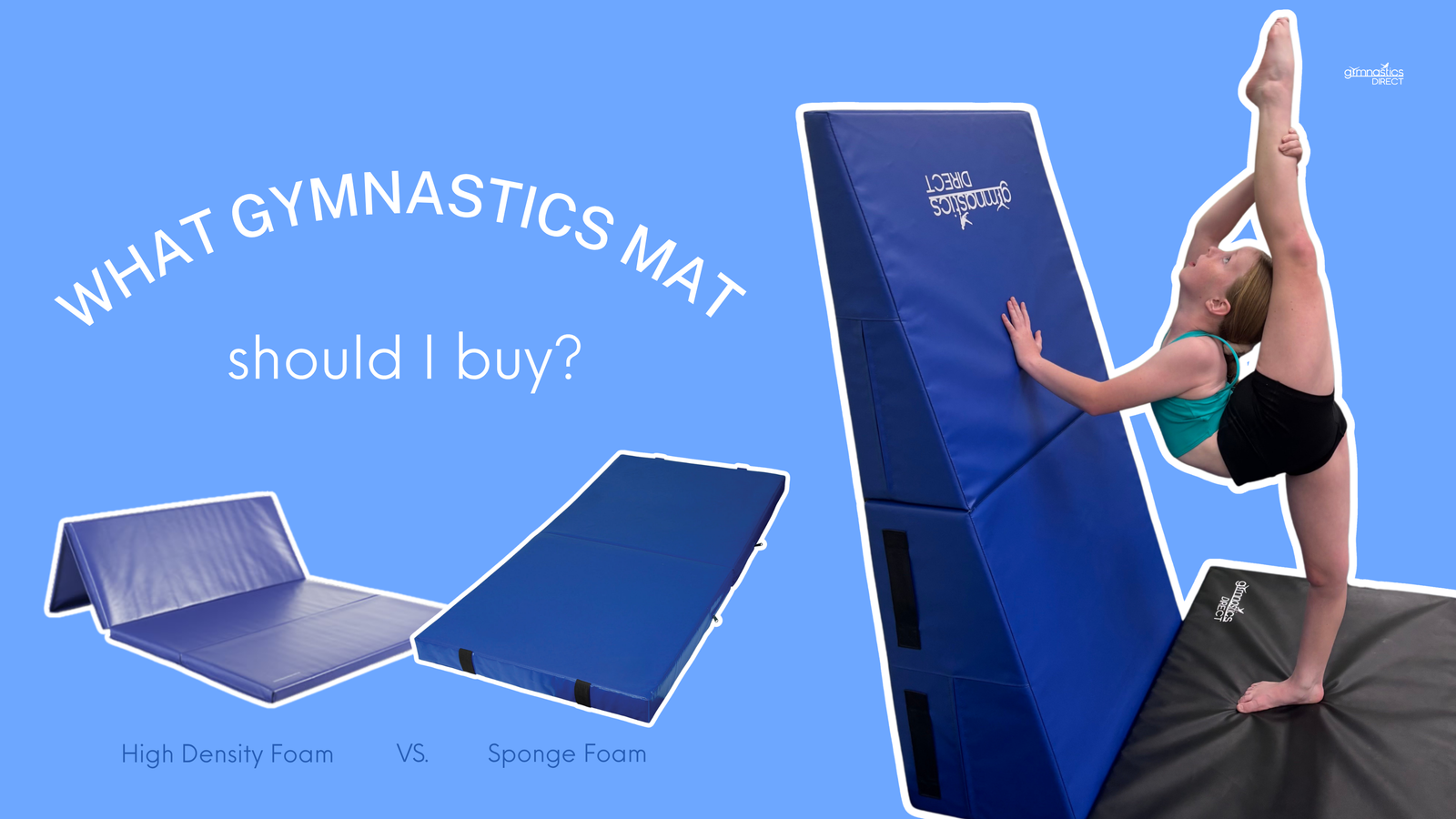

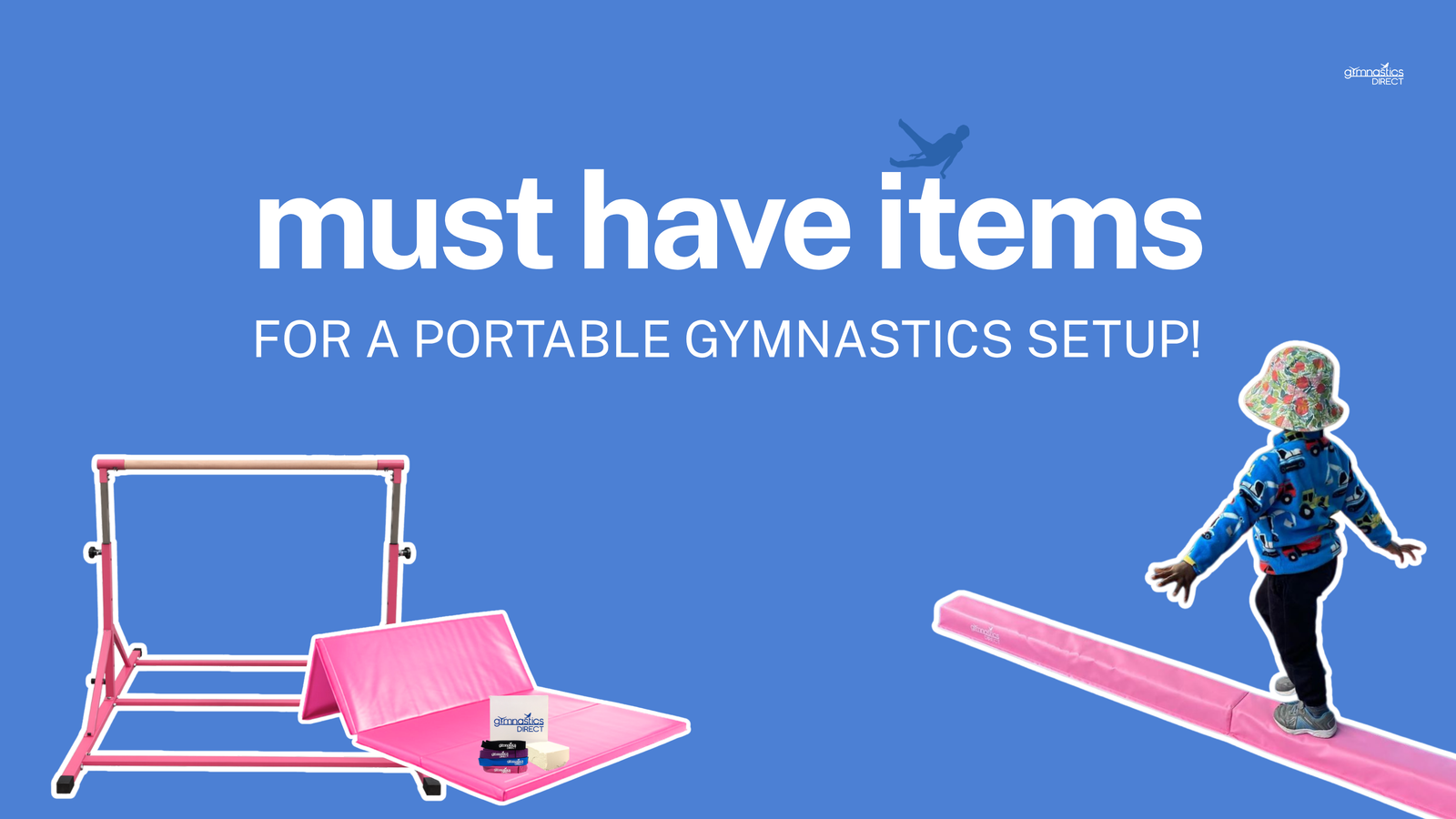

Top 5 Must-Have Items for a Portable Gymnastics Setup
Setting up a space for gymnastics practice at home is easier than most people expect, and you don't need a full gym to do it safely or effectively. Here's our guide to the five must-have items for a portable setup