




Gymnastics Mat vs Air Track: Which Is Best for Your Training?
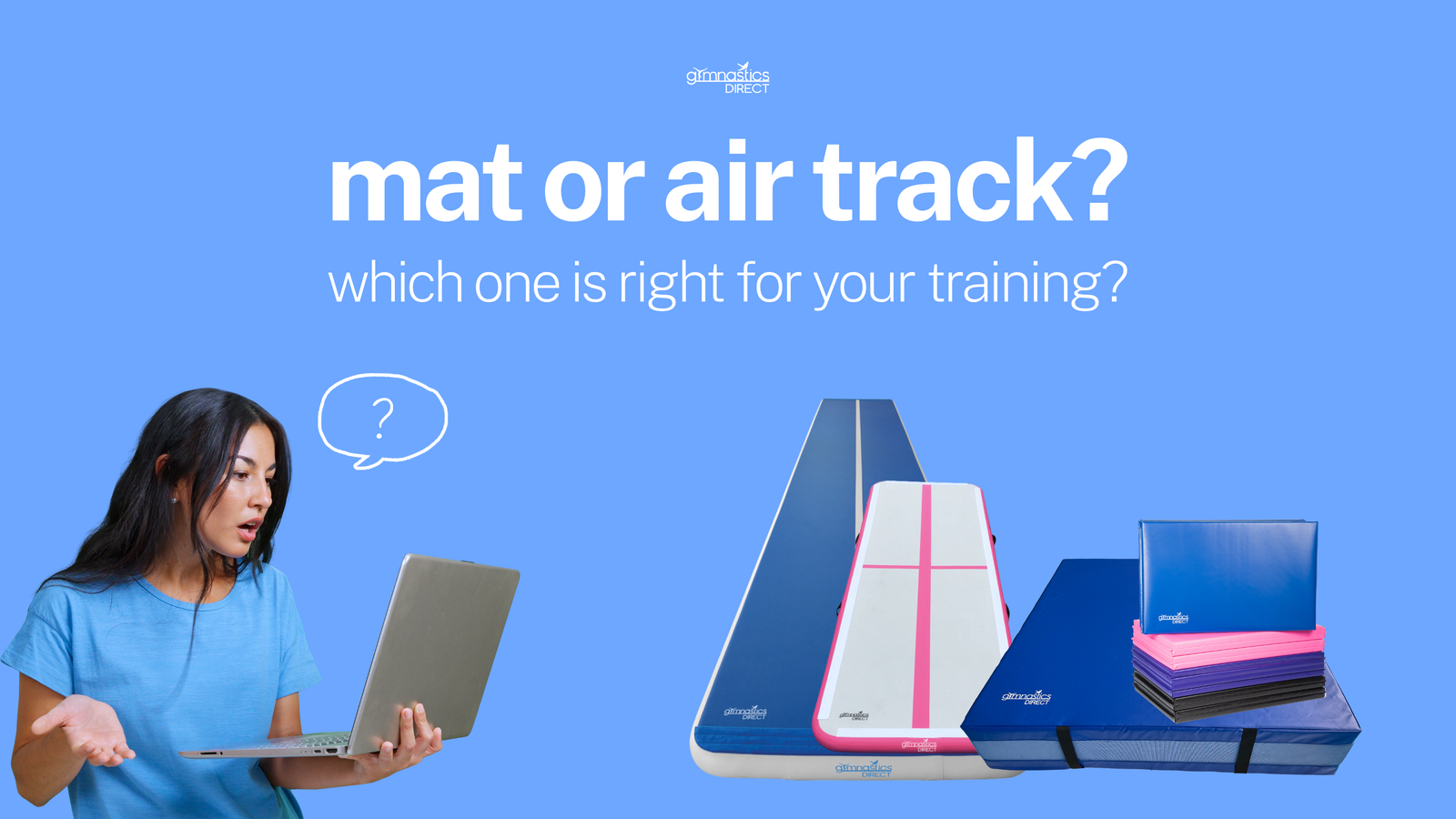

Whether you're just starting gymnastics or looking to take your training further, having the right equipment can make a big difference to how and where you practice.
Two of the most popular options for home gymnastics training are gymnastics mats and air tracks. While both provide cushioned surfaces for practicing gymnastics skills, they're designed for different types of movement and training.
A gymnastics mat offers a stable, supportive surface for everything from handstands and cartwheels to flexibility and conditioning. An air track, on the other hand, provides additional rebound, making it particularly popular for tumbling and connected skills.
So, which should you choose?
At Gymnastics Direct, we've spent 20 years supplying gymnastics equipment to Australian families, clubs and training facilities. We know that choosing the right equipment isn't always straightforward, particularly when you're trying to find something that suits your gymnast's ability, training goals and available space.
Let's break down the differences to help you make an informed decision.
What's the Difference Between a Gymnastics Mat and an Air Track?
Although both are used for gymnastics training, the biggest difference comes down to the surface and how it responds to movement.
A traditional gymnastics mat is generally constructed using foam enclosed in a durable covering. It provides cushioning while maintaining a relatively stable surface, making it suitable for a broad range of gymnastics activities.
An air track is an inflatable training surface that uses air pressure to create a more responsive surface. When a gymnast jumps or tumbles on an air track, the surface provides rebound that isn't typically present in a standard foam mat.
Neither is necessarily better than the other. The right choice depends on the skills being practised.
When Should You Choose a Gymnastics Mat?
If you're looking for one versatile piece of equipment for everyday gymnastics training, a gymnastics mat is often a great starting point.
Its relatively stable surface makes it suitable for controlled movements, individual skills and general floor-based exercises.
Gymnastics mats are particularly useful for:
-
Handstands and cartwheels
-
Forward and backward rolls
-
Bridges and appropriate walkover progressions
-
Strength and conditioning exercises
-
Stretching and flexibility
-
Basic floor routines
-
General gymnastics practice at home
For younger gymnasts and beginners, a mat can provide a practical training surface without requiring a large amount of space.
Which Gymnastics Direct Mat Should You Choose?
Not all gymnastics mats are the same, and the way you plan to train can help determine which style is most suitable.
Our folding gymnastics mats are a popular option for home training because they can be folded away when not in use.
Available in multiple lengths, including 2m, 2.5m and 3m, they offer a convenient surface for practicing individual skills, stretching and conditioning.
They're particularly useful for families who need to set up and pack away their training space regularly.
If you'd prefer one continuous surface, our 2m Non-Folding Gymnastics Mat is another option.
Unlike a folding mat, it doesn't have folds running through the training surface. It also features hook-and-loop fasteners on all four sides, allowing multiple mats to be joined together.
This makes it a practical choice for families wanting to create a larger training area or expand their setup over time.
For those looking to create a larger dedicated training area, our Flexi-Roll Mats offer another alternative.
Their roll-out design makes them useful for floor-based gymnastics activities, particularly where a longer, continuous training area is preferred.
What About Crash Mats?
While gymnastics mats and air tracks are commonly used for floor skills and tumbling practice, crash mats serve a different purpose.
Crash mats, sometimes called landing mats, are designed to provide additional cushioning for specific landing activities and gymnastics drills.
Unlike a standard gymnastics mat or air track, a crash mat is generally intended for landing applications rather than continuous tumbling or everyday floor exercises.
However, not all crash mats are designed for the same activities. Their thickness, foam construction and intended use can vary, so it's important to choose a mat appropriate for the skill, equipment and gymnast's ability.
Not sure which type of mat is right for you? Our guide, Which Gymnastics Mat Should You Buy? explores the different styles of gymnastics mats and how to choose one that suits your training needs
When Should You Choose an Air Track?
If tumbling is becoming a major focus of your gymnast's training, an air track may be worth considering.
Unlike a traditional foam mat, an air track provides additional rebound through its inflatable construction.
This responsive surface makes air tracks particularly popular for dynamic gymnastics movements and practising connected skills.
Air tracks are commonly used for:
-
Round-offs
-
Handspring progressions
-
Tumbling combinations
-
Jumps and leaps
-
Aerial progressions
-
Repeated tumbling drills
-
Appropriate skill development under coaching guidance
The additional rebound can change how skills feel compared with a standard mat, which is why it's important that gymnasts practise skills appropriate to their ability and follow their coach's advice.
Which Air Track Length Is Best?
One of the biggest considerations when choosing an air track is its size. Both length and thickness can influence how the surface feels and the types of training it's suited to.
At Gymnastics Direct, our inflatable training equipment ranges from a compact 3m Air Board through to 15m Air Tracks, with custom sizes also available.
3m Air Board – 10cm Thick
Our 3m Air Board is a compact option for gymnasts looking to practice individual skills, jumps and basic progressions.
At 10cm thick, it has a lower profile than our larger air tracks, making it a practical option for selected drills and activities where a longer tumbling surface isn't required.
4m Air Track – 20cm Thick
Our 4m Air Track offers a longer training surface and a thicker, 20cm inflatable construction.
It's a great option for gymnasts wanting additional room for individual tumbling skills and progressions without moving to a much longer air track.
Choosing the right air track involves more than just length. From thickness to available training space, there are several factors worth considering. For a closer look, read our How to Choose an Air Track: A Guide for Home and Club Training.
6m Air Track – 20cm Thick
Our 6m Air Track provides more room for connected skills, tumbling progressions and combinations.
With six metres of training space, it's a versatile choice for home gymnasts who have sufficient room and want to develop their tumbling practice.
Our longer air tracks provide additional space for connected tumbling passes and are particularly suited to larger training areas, gymnastics clubs and training facilities.
Before purchasing, always consider the available space, including adequate clearance around the equipment.
Does an Air Track Feel Different to a Gymnastics Floor?
Yes, and this is an important consideration when choosing training equipment.
An air track and a traditional gymnastics floor don't respond to movement in exactly the same way.
Because an air track uses air pressure to create rebound, the surface can feel more responsive than a standard foam mat. Its firmness can also vary depending on inflation.
A gymnastics floor, particularly a sprung competition-style floor, has different construction and performance characteristics.
This means a skill practiced successfully on an air track may feel different when performed on a traditional gymnastics floor.
Air tracks can be useful training tools, but they shouldn't be viewed as a replacement for coached practice on the surfaces used in gymnastics classes and competitions.
Gymnastics Mat vs Air Track: A Side-by-Side Comparison
| Feature | Gymnastics Mat | Air Track |
|---|---|---|
| Surface | Foam-based and relatively stable | Inflatable and responsive |
| Rebound | Minimal | Additional rebound |
| Best suited for | General skills, conditioning, flexibility and controlled movements | Tumbling, jumps and connected skills |
| Beginners | Suitable for many basic activities | Suitable for selected activities with appropriate guidance |
| Storage | Folding and roll-out options available | Deflates and packs away |
| Setup | Generally ready to use | Requires inflation |
| Space | Smaller options available | Length and clearance requirements vary |
| Main advantage | Versatility | Responsive tumbling surface |
Which Is Best for Home Gymnastics Training?
Still undecided? Consider what your gymnast spends most of their time practicing.
Choose a gymnastics mat if:
-
You're setting up your first home gymnastics training area.
-
Your gymnast mainly practises handstands, cartwheels, rolls or flexibility.
-
You want a versatile surface for multiple types of exercise.
-
You have limited space.
-
You prefer equipment that can be set up quickly.
Choose an air track if:
-
Tumbling is a major focus of your gymnast's training.
-
They're working on appropriate connected skills and progressions.
-
You want a more responsive surface.
-
You have enough room for the air track and surrounding clearance.
-
You're looking for equipment that complements their coached gymnastics training.
It's also important to consider the gymnast's age, experience and the specific skills they're learning. A coach can help determine which surface is appropriate for their current training level.
Can You Use Both a Gymnastics Mat and an Air Track?
Absolutely. In fact, the two can complement each other.
A gymnast might use a traditional mat for stretching, conditioning, handstands and controlled floor skills, then use an air track for suitable tumbling drills and combinations.
Having both provides access to different training surfaces, allowing each to be used for its intended purpose.
However, you don't necessarily need to purchase both at once.
If you're building a home training setup, it's worth starting with the equipment that best supports your gymnast's current skills rather than buying something they may not yet need.
A Note on Safe Training
While both gymnastics mats and air tracks provide cushioned training surfaces, neither eliminates the risk of injury.
A standard gymnastics mat or air track should not be assumed to replace specialised landing or crash mats required for certain skills.
Always ensure equipment is used on a suitable surface, with adequate surrounding clearance and appropriate supervision. New or advanced gymnastics skills should be taught under the guidance of a qualified coach.
Final Thoughts: Which Should You Choose?
Ultimately, choosing between a gymnastics mat and an air track comes down to what you're training for.
If you want a versatile surface for handstands, cartwheels, flexibility, conditioning and general gymnastics practice, a gymnastics mat is often the most practical starting point.
If your gymnast is focused on tumbling, connected skills and progressions, an air track may be a valuable addition to their training.
And if you're looking to create a more complete home gymnastics setup, there's certainly a place for both.
At Gymnastics Direct, we've been helping Australian gymnasts, families and clubs find suitable training equipment since 2006.
Explore our range of Gymnastics Mats and Air Tracks, or get in touch with our team if you're unsure which option best suits your training needs.
Leave a comment
Also in Advice for Parents

Best Gymnastics Balance Beam for Home (Australia): Which Beam Should You Buy?
Find the best gymnastics balance beam for home use in Australia. Compare beginner, adjustable and elite beams by age, skill level and budget.


School Holiday Programs - July 2026
Take a look at the July School Holiday programs running at clubs and studios across Australia.